
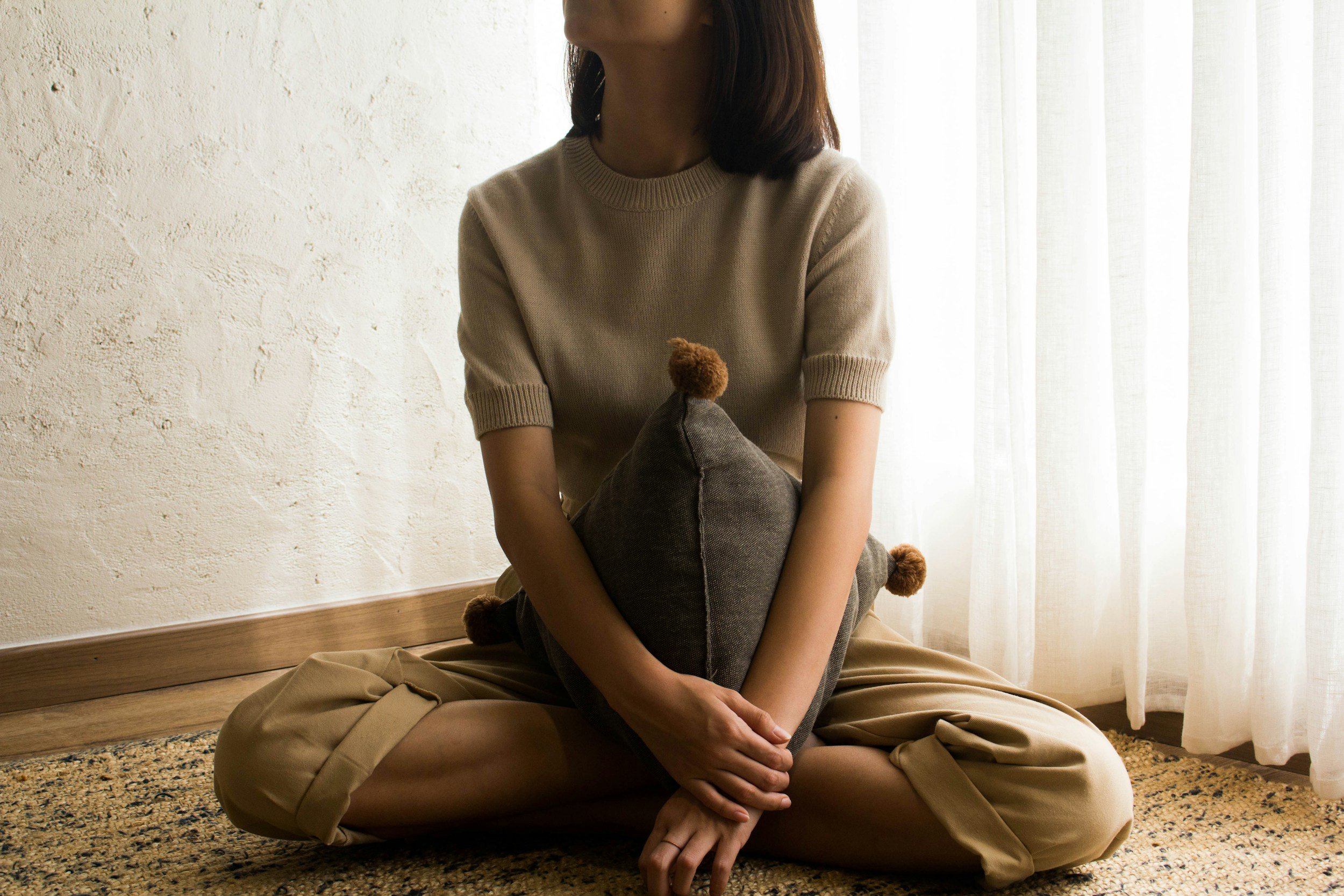
Relaxation-induced anxiety is when you feel more anxious, not less, as you try to relax. You finally sit down to rest, and instead of softening, your chest tightens and your mind starts racing. Or maybe you start to feel antsy, physically restless and unsettled in your body.
If that's you, it doesn't mean you're doing rest wrong. It usually means your body has been on alert for a long time.
I wrote about meeting this in my own life in What Does a Regulated Nervous System Feel Like? (Honestly? Boring). Here, I want to go a little deeper into what's actually happening.
What is relaxation-induced anxiety?
It's anxiety that shows up during relaxation itself: while you're resting, meditating, lying in bed, or finally having a quiet moment.
Researchers have studied it. In 2019, Penn State University researchers Hanjoo Kim and Michelle Newman published a study in the Journal of Affective Disorders. They looked at 96 college students, including some with generalised anxiety disorder or depression, and found that people who were more sensitive to sudden shifts in negative emotion were more likely to feel anxious during relaxation exercises.
In other words, for some people, the shift from busy to still can feel like a jolt.
Why do I feel anxious when I relax?
Because when a nervous system has run on stress for so long, calm doesn't register as safe. It registers as unfamiliar.
When you've lived in survival mode, there's a constant sense of urgency. There's ALWAYS more to do. And underneath it sits a very persuasive belief:
It's not safe to rest.
It's not safe to just be.
The threat is coming, and I must be prepared.
So when everything goes quiet, part of you braces for the worst. Staying on alert can feel easier than being caught off guard.
What I see again and again in my work is this: our nervous systems don't choose what's safe. They choose what's familiar.
What helps?
There's no forcing your way into calm. What tends to help is letting your body get used to it slowly.
• Small doses of calm. Negotiate with the part of you that likes to stay busy. A few minutes of stillness, rather than a whole afternoon. Let your body learn that nothing bad happens.
• Noticing without forcing. If anxiety rises, notice it. Where is it in your body? You don't have to make it go away. Instead of resisting it, what happens if you actually give it more space?
• Letting easy feel strange for a while. Calm might feel flat, empty or boring at first. That doesn't mean something's wrong. It might be your body meeting safety for the first time.
If the anxiety is intense, or it's getting in the way of your daily life, it's worth talking to someone about it. Anxiety is a symptom of a dysregulated nervous system, and we can work together in sessions to gently regulate your nervous system and to metabolise anxiety so that you don’t feel stuck there all the time.
Try this
Set a timer for three minutes. Sit somewhere comfortable and do nothing. When the urge to get up or check your phone arrives, notice it, and stay a little longer. Then notice how your body feels when the timer goes.
If you need to focus on anything, draw your attention to your breath, perhaps noticing how the body feels when it expands and contracts, or the sensation of the air as it passes through your nostrils. This is a simple mindfulness practice that will help you to gently experience your capacity and baseline for stillness.
When it's time for support
Learning to feel safe in stillness isn't something you have to work out on your own. It's something I work on with clients through Holistic Counselling on the Sunshine Coast, in person in Mooloolaba and online across Australia.
We go gently, at your body's pace. The aim isn't for you to need me forever. It's for your body to learn that it can settle on its own.
Curious whether this work is for you?
If something here landed for you, you're welcome to book a free 15-minute consult call. It's simply a chance to feel whether working together is the right fit. No pressure either way.
Frequently asked questions
Is it normal to feel anxious when I try to relax?
It can happen, especially if your body has been running on stress for a long time. Feeling uneasy in stillness doesn't mean relaxation isn't for you. It often means your body is still learning that calm is safe. And there are some really great techniques I can share with you in a session to relax and down regulate your nervous system when feeling still is too difficult to access.
Does relaxation-induced anxiety go away?
It's different for everyone, and there's no timeline your body has to meet. Gentle, regular moments of calm tend to help stillness feel more familiar over time.
Is it okay to stop if relaxing feels too uncomfortable?
Yes. You don't have to push through. Going slowly, and stopping when you need to, is part of teaching your body that it's safe.
If this tends to happen to you, I suggest utilising mindful movement as an entry point into safer experiences of stillness.
