
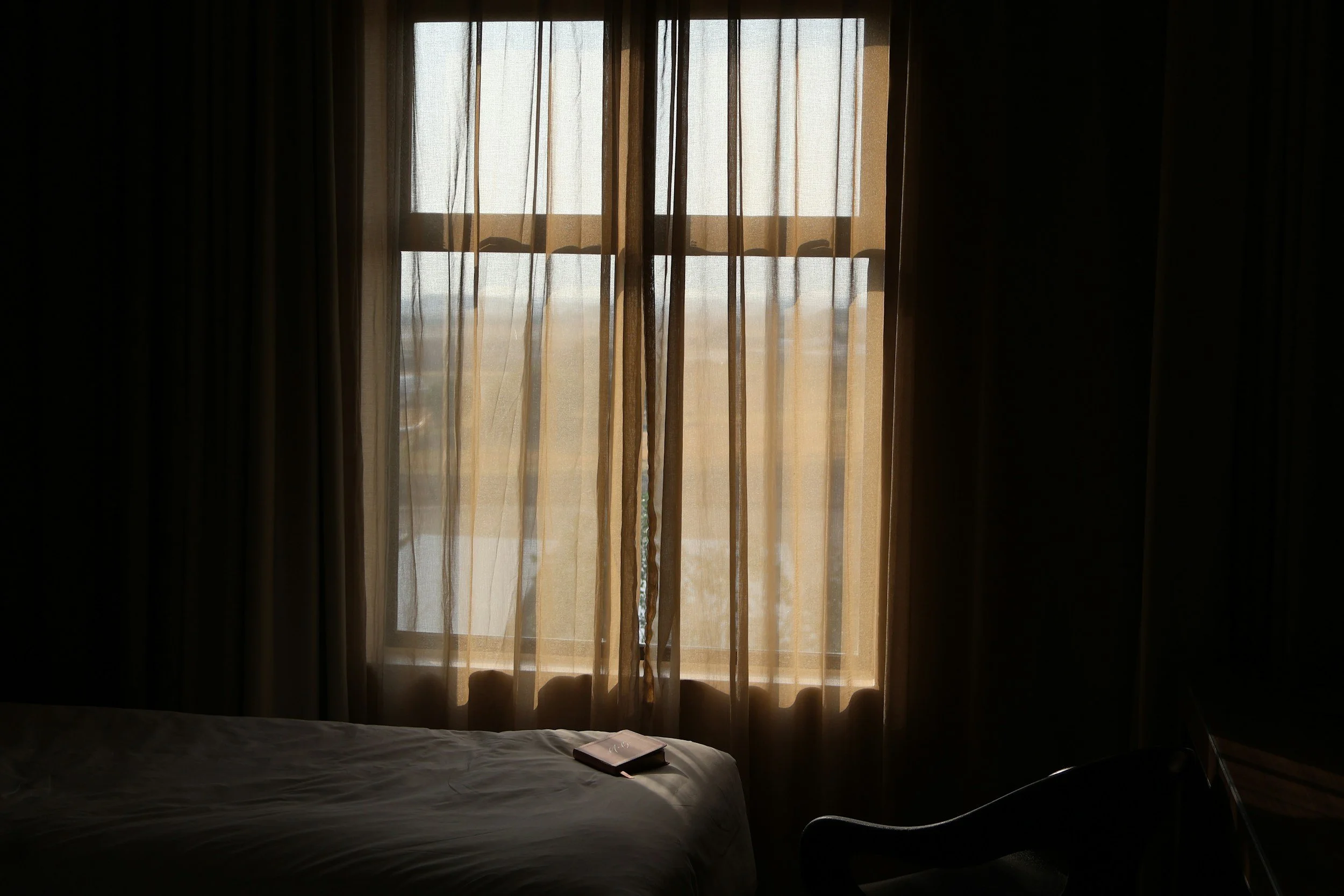
A regulated nervous system often feels calm, quiet and steady. You can rest without bracing for what's coming next. But if you've lived in survival mode for a long time, here's the part nobody warns you about: at first, it can feel boring.
That was my 5am thought recently. "Living in a regulated nervous system is boring."
And I say that as a holistic counsellor.
I've known this intellectually for years. But recently, my body learned it (like ACTUALLY learned it), and that's a completely different thing.
Because what my body showed me wasn't what I expected.
What is survival mode?
Survival mode is when your body stays switched on for threat, even when nothing is going wrong right now.
Most of us are living in overdrive. The world moves fast. Add chronic stress, emotional stress and a deep sense of not being safe, and we end up living in survival mode.
There's a constant sense of urgency.
There's ALWAYS more to do.
That's the fight-or-flight response, switched on and never quite switched off.
For some people it looks like flight: constantly running away from a perceived threat.
For others it looks like fight: constantly pushing up against it. Creating. Doing. Achieving.
Why can't I relax, even when I have time?
Because somewhere underneath, part of you still believes it isn't safe to.
All that mobilised energy creates a very persuasive belief that underpins everything:
I can't be still.
It's not safe to rest.
It's not safe to just be.
The threat is coming, and I must be prepared.
Life in this place has a lot of drama. A lot of chaos. A lot of action. It's a lot of things. But it's NEVER boring.
When you've lived here long enough, you see the world through these eyes. Therapists call it hypervigilance: a nervous system constantly scanning for threat. In plain words, your body is always on watch, even on a quiet Sunday afternoon.
Why do high achievers find it so hard to slow down?
Because high achievers aren't just scanning for threats. They're scanning for opportunities too.
The next idea. The next launch. The next thing that might finally make it feel like there's enough.
So we hustle. Constantly.
What does a regulated nervous system feel like?
For me, it's felt quieter. Slower. Less driven by the next thing.
I don't mean a calm moment here and there. I mean a whole new baseline.
That's what I've been experiencing since coming back to my own neurofeedback journey, regulating my nervous system at the level of the brain.
I used to be the person who kept herself busy. Always adding something to the to-do list. Always creating a new project. Always investing in a new training.
Because there was always something wrong that needed fixing. Always something I could be better at. Always another made-up milestone that defined my value and success.
That's the busyness of doing. The belief that more is better.
But what if more isn't better?
What if more is actually getting in the way of your capacity to hold what's already working?
What if more was an illusion that kept you stuck in cycles of DOING instead of actually ENJOYING what was already built?
So recently I opened my project management system. All the projects. All the tasks. All the things I'd delegated.
And I deleted half of it.
Not postponed. Not delegated. DELETED.
Because you know what? I don't need to do it.
I can do less. (And so can you, you're welcome lol)
I can let it be easy.
But I have to warn you, "easy" can feel uncomfortably boring at first.
Why does calm feel uncomfortable?
When a nervous system has run on stress for a long time, calm doesn't register as safe. It registers as unfamiliar.
There's even a name for this: relaxation-induced anxiety. In 2019, Penn State University researchers Hanjoo Kim and Michelle Newman published a study in the Journal of Affective Disorders. They looked at 96 college students, including some with generalised anxiety disorder or depression, and found that people who were more sensitive to sudden shifts in negative emotion were more likely to feel anxious during relaxation exercises.
What I see again and again in my work is this: our nervous systems don't choose what's safe. They choose what's familiar.
So when the chaos finally quiets down, it can feel flat. Empty. Boring.
That doesn't mean something's wrong.
It might be your body meeting safety for the first time. Secure. Able to settle. Able to relax into stillness, connection and presence.
One gentle note. If the flatness comes with hopelessness, or it doesn't lift, that's something different, and it's worth talking to someone about.
Learning to be bored, and content, is a crucial step in creating inner peace.
Try this
Open your to-do list or calendar and delete one thing.
Not postpone. Not delegate. Delete it.
Then notice what your body does with the space. Does it relax? Does it itch to fill the gap? Either way, it's information. You don't have to fix it. Just notice.
When it's time for support
Learning to feel safe in calm isn't something you have to work out on your own. It's something I work on with clients through Holistic Counselling on the Sunshine Coast, in person in Mooloolaba and online across Australia.
We go gently, at your body's pace. The aim isn't for you to need me forever. It's for your body to learn that it can settle on its own.
Curious whether this work is for you?
If something here landed for you, you're welcome to book a free 15-minute consult call. It's simply a chance to feel whether working together is the right fit. No pressure either way.
So yes, living in a regulated nervous system is boring.
Turns out, boring is what safe feels like.
And I'm learning to fall more in love with it, one day at a time.
